
Introduction
Kenya is home to some of the world’s most prized Arabica coffee. From the fertile slopes of Mount Kenya to the hills of Nyeri and Kirinyaga, coffee cultivation is part of the country’s heritage. Known for its lively acidity, full body, and fruity aroma, Kenyan Arabica remains a favorite among coffee lovers globally.
Ideal Conditions for Quality Coffee
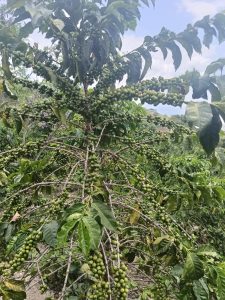
Arabica coffee thrives in Kenya’s highlands, between 1,400 and 2,000 meters above sea level, where the soil is volcanic and rich in nutrients. The combination of cool temperatures, consistent rainfall, and well-drained soils allows the coffee cherries to mature slowly, developing deep, complex flavors that make Kenyan coffee stand out worldwide.
From Seed to Sapling: The Nursery Stage
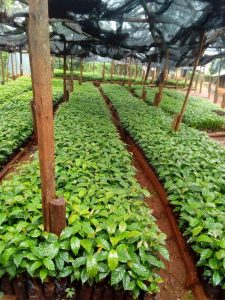
Every great cup of Kenyan coffee begins in a nursery. Farmers select certified seeds — mainly SL28, SL34, Ruiru 11, or Batian — known for disease resistance and rich cup quality. Nursery beds are prepared with fertile, well-drained soil under shade. Seeds are sown in shallow drills and watered regularly until they sprout. After developing true leaves, seedlings are transplanted into polythene bags filled with topsoil and compost. They are later hardened by gradually exposing them to sunlight and reduced watering to prepare them for field conditions.
This careful nursery management ensures strong, healthy plants capable of producing premium coffee.
Where Kenya’s Coffee Grows
The country’s major coffee-growing regions include Nyeri, Kirinyaga, Embu, Murang’a, Kiambu, and Meru in central Kenya, as well as parts of western Kenya such as Kisii, Bungoma, and Kericho. Each area produces beans with unique flavor notes depending on the altitude and soil type.
Distinctive Varieties and Flavor
Kenyan Arabica is celebrated for its wine-like acidity, blackcurrant tones, and floral aroma.
- SL28 and SL34 are known for their bold, fruity notes.
- Ruiru 11 offers good disease resistance and balance.
- Batian combines high yield with excellent flavor.
These varieties give Kenyan coffee its global reputation for brightness and clarity in the cup.
From Farm to Auction
After harvesting, cherries are handpicked when ripe, pulped, fermented, washed, and sun-dried. The beans are then graded and sold through the Nairobi Coffee Exchange, a transparent auction system where international buyers bid for the best lots, ensuring fair pricing for quality coffee.
Farmers and the Future
More than 70% of Kenya’s coffee is produced by smallholder farmers in cooperatives. Despite challenges like rising costs, aging trees, and climate change, initiatives promoting youth involvement, replanting, and sustainable farming are reviving the sector.
Conclusion
From nursery planting to the final brew, Kenyan Arabica coffee is a story of dedication, community, and craftsmanship. Each sip captures the essence of the country’s fertile lands and the skill of its farmers. Truly, Kenya’s Arabica coffee is liquid gold — a taste of excellence from seed to cup.
